



Bamako Summit: The AES Seals Its Security and Diplomatic Destiny in the Sahel Region
The juntas of Mali, Niger, and Burkina Faso strengthen their alliance against jihadist threats during a crucial summit.
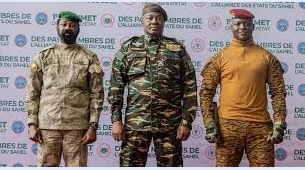
O n December 22, 2024, Bamako hosted the second summit of the heads of state of the Alliance of Sahel States (AES), bringing together Generals Assimi Goïta (Mali), Abdourahamane Tiani (Niger), and Ibrahim Traoré (Burkina Faso). The objective: to consolidate security and diplomatic cooperation after one year as a confederation, with a primary focus on the AES Joint Force.

The two-day summit, opened under high security, marks a decisive milestone for the AES—originally formed in September 2023 as a defense pact and elevated to a confederation in July 2024. The leaders, all from military juntas, presented documents from their previous meeting in Niamey, symbolizing their unity in the face of Sahelian instability. Discussions centered primarily on defense against jihadist threats following their withdrawal from the G5 Sahel and ECOWAS. The newly operational AES Joint Force aims to coordinate cross-border military operations and resource sharing.
A preparatory meeting of the Ministers of Foreign Affairs, Defense, Security, and Development was held on December 20 and 21 in Bamako, chaired by Goïta. This session served to evaluate the achievements of the first year, advance institutional structures, and discuss progress regarding ECOWAS. Although Traoré’s absence was noted on the first day, the event underscores a commitment to autonomous regional integration focused on economic and diplomatic security.
This summit takes place against a backdrop of persistent tensions: jihadist insurgencies, regional sanctions, and a quest for strategic independence. The AES aims to establish a common bank and a regional television station—as mentioned in other reports—to counter foreign influence. RFI highlights this dynamic as a "sealing of destiny" regarding security, which may potentially isolate the three countries but strengthens their sovereignty.
This gathering in Bamako lays the foundation for a more robust AES, crucial for Sahelian stability, while simultaneously challenging traditional West African frameworks.